If you are deciding between Moorings and Coquina Sands, you are already looking in two of Naples’ most sought-after coastal neighborhoods. The challenge is not whether either area offers beach living. It is understanding how daily life, property options, and long-term ownership costs can feel very different once you get past the map. This guide breaks down the practical differences so you can compare both neighborhoods with more confidence. Let’s dive in.
Beach access feels different
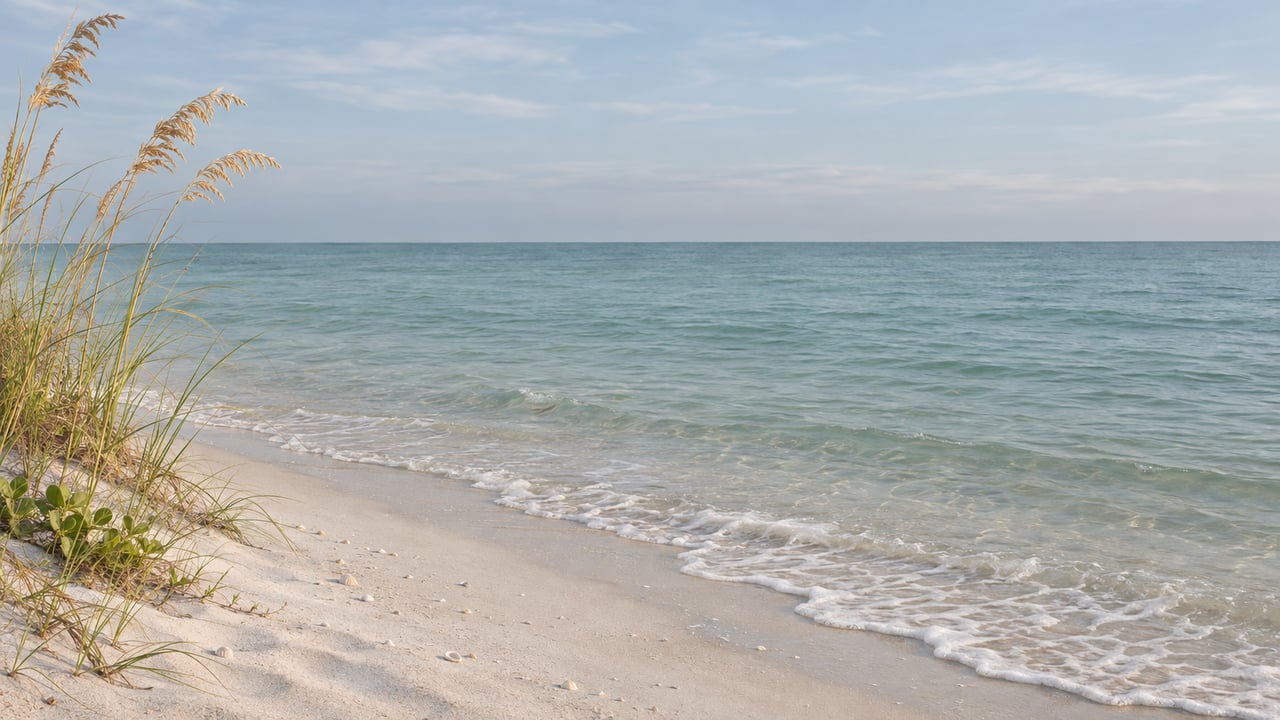
Both neighborhoods put you close to the Gulf, but beach access works in different ways.
In Moorings, the beach experience is tied in part to the Moorings Property Owners Association, or MPOA. The City of Naples describes Moorings as a mature, quiet neighborhood with canopied trees, strong Gulf access, and about 4,000 homes and condos across roughly 1,300 acres. Property owners may join MPOA for Beach Park parking privileges and member events, which creates a more owner-focused beach routine.
In Coquina Sands, beach life is centered more around public access at Lowdermilk Park. That park is one of Naples’ best-known beachfront parks and includes parking, volleyball, a playground, restrooms, showers, gazebos, ADA beach mats, and a concession stand. The City of Naples says beach parking requires either a permit or pay-by-space year-round.
Moorings beach access
Moorings stands out for buyers who want a neighborhood beach structure rather than relying mainly on public park access. MPOA says it is a voluntary homeowners association, but its rules shape how owners, renters, and houseguests use the Beach Park.
For example, the current owner assessment is $200 annually, renter registration is $500, owners lose beach-park rights during rental periods, and houseguest passes are limited and fee-based. If you are buying a second home or considering seasonal rental use, those details matter.
Coquina Sands beach access
Coquina Sands has a different rhythm. The neighborhood’s history explains why Lowdermilk Park became the area’s beach anchor after beachfront land was given to the city for a public beach park.
That means your day at the beach may feel more public-facing and park-oriented. For many buyers, that is a plus because Lowdermilk offers a broad set of amenities in one place and serves as a central part of the neighborhood’s identity.
Neighborhood character and housing mix
Moorings and Coquina Sands are both coastal, low-rise neighborhoods, but they do not feel exactly the same once you drive through them.
The city’s land-use framework places both in high-density low-rise categories of up to 15 dwelling units per acre. Coquina Sands low-rise allows two habitable stories over parking, while Moorings low-rise allows three habitable stories over parking. In simple terms, both neighborhoods stay relatively restrained in height, but some Moorings condo buildings can read a bit taller.
What Moorings feels like
Moorings is the larger and more mixed neighborhood. MPOA says its footprint includes about 875 single-family homes and 82 condo buildings, and the city describes it as a mature coastal district with tree canopies and strong beach access.
That larger scale gives buyers more variety. In practice, you will often see older homes, rebuilt residences, and condo corridors within the same broader neighborhood fabric.
What Coquina Sands feels like
Coquina Sands feels more compact and more condo-forward. According to the neighborhood association, it includes about 230 single-family residences and 660 multifamily units, which helps explain the strong condominium presence along Gulf Shore Boulevard.
Its history also points to a grid-like original street pattern. For buyers, that often translates into a more traditional street layout and a neighborhood feel that differs from newer planned communities.
Lot sizes and redevelopment potential
Lot size can shape everything from privacy to renovation options, so it is worth comparing.
The current listing examples in the research are not official neighborhood averages, but they do offer a useful snapshot. In Moorings, sample listings include 400 Wedge Drive at 0.29 acres and 397 Mooring Line Drive at 0.40 acres. In Coquina Sands, sample listings include 1332 Crayton Road at 0.45 acres and 470 Yucca Road at 0.97 acres.
That sample suggests Moorings often shows a fairly consistent oversized-lot coastal pattern, while Coquina Sands can present a wider range that includes both more standard coastal lots and larger legacy parcels. If you are thinking about a rebuild, major renovation, or long-term land value, that difference may be worth a closer look.
Pricing and inventory right now
Price is one of the clearest differences between these neighborhoods today.
As of April 2026, Realtor.com shows Moorings with 264 homes for sale, a median listing price of $1.325 million, a median price per square foot of $835, and a median time on market of 106 days. Coquina Sands shows 57 homes for sale, a median listing price of $3.675 million, a median price per square foot of $1,305, and a median time on market of 88 days.
Here is the quick takeaway: Moorings offers a deeper inventory pool and a lower median entry point, even though it remains a premium coastal market. Coquina Sands currently screens as the tighter-supply, higher-price neighborhood with a stronger median price per square foot.
Simple market comparison
| Neighborhood | Homes for Sale | Median Listing Price | Median Price per Sq. Ft. | Median Days on Market |
|---|---|---|---|---|
| Moorings | 264 | $1.325M | $835 | 106 |
| Coquina Sands | 57 | $3.675M | $1,305 | 88 |
If you want more options across condos, single-family homes, and varying price bands, Moorings gives you a broader field. If you are comfortable paying a higher coastal premium for a smaller, tighter market, Coquina Sands may align better.
Ownership costs and association structure
A neighborhood’s value is not just about purchase price. It is also about the ownership experience after closing.
In Moorings, MPOA is voluntary, but it functions as a meaningful amenity layer because of beach-park parking privileges, rental registration rules, and guest access limits. This can be especially important if you are buying a second home, plan to host visitors, or may rent the property at times.
In Coquina Sands, the association is lighter-touch and more civic in focus. Its household membership is $90 for two residents, and benefits center on meetings, communications, social events, signage, landscaping, and advocacy rather than beach-park administration.
Both neighborhoods also sit within the Moorings Bay Special Taxing District for certain waterfront properties. The City of Naples says the district was created to support water quality, navigability, and maintenance dredging for canals, waterways, and Doctors Pass.
Boating and waterfront considerations
If boating is part of your Naples lifestyle, Moorings has a notable bayfront identity.
The city says Moorings Bay is a densely urbanized estuary and that there are no public boat ramps there. Doctors Pass is the only inlet connecting the bay to the Gulf. That setup makes the area feel more oriented toward property owners with direct or nearby water access rather than buyers looking for easy public launch options.
Coquina Sands also benefits from proximity to the bay and Gulf, but the research points more strongly to its public-beach and redevelopment story than to a distinct neighborhood boating structure. If direct water access is a major priority, this is an area where property-level review becomes especially important.
Long-term value drivers
Both neighborhoods have strong long-term appeal, but for different reasons.
Coquina Sands has visible redevelopment momentum around Naples Beach Club. The city says a conservation easement preserves 104.6 acres, or more than 84% of that property, as recreation and open space in perpetuity. That supports a long-term story of prestige, open space, and controlled change rather than full-scale intensification.
Moorings benefits from scale, established landscaping, and a beach-park structure that is difficult to replicate. It also has a strong bayfront identity through Moorings Bay and Doctors Pass, which helps support its lasting appeal in Naples’ coastal market.
In both neighborhoods, shoreline infrastructure still matters. The City of Naples is actively restoring public beach access points and replacing beach-end seawalls, which shows how important ongoing coastal maintenance remains.
Flood zones and property condition matter
Beach proximity is a major draw, but it should never replace property-level due diligence.
Because both neighborhoods sit in the city’s coastal floodplain environment, buyers should review flood zones, insurance considerations, and seawall condition carefully. That is especially important if you are comparing older homes, renovated properties, or waterfront parcels where future maintenance costs may vary significantly.
For buyers weighing renovation potential, this is where local guidance can make a real difference. Construction insight can help you look beyond finishes and better understand what a property may require over time.
Which neighborhood may fit you best
There is no one-size-fits-all answer between Moorings and Coquina Sands. The better choice depends on how you want to live, not just what you want to spend.
Moorings may be the better fit if you want:
- A broader housing mix
- More inventory to choose from
- A mature neighborhood feel with canopy streets
- An owner-member beach-park structure
- A strong bayfront identity
Coquina Sands may be the better fit if you want:
- A more compact west-of-41 setting
- A stronger condo presence
- Lowdermilk-centered public beach access
- A higher-end market posture
- Redevelopment momentum near Naples Beach Club
If you are comparing the two, it helps to look beyond listing photos and focus on access, ownership rules, carrying costs, and the kind of daily routine each neighborhood supports.
Choosing between these neighborhoods often comes down to nuance. If you want help comparing specific properties, renovation implications, or lifestyle fit in Naples’ coastal market, the Mauceli Grech Group can help you evaluate the details with a clear, concierge-level approach.
FAQs
What is the main beach access difference between Moorings and Coquina Sands?
- Moorings offers a neighborhood beach-park structure through MPOA for eligible members, while Coquina Sands is more closely tied to public beach access at Lowdermilk Park and city-managed parking rules.
How do home prices compare in Moorings and Coquina Sands?
- As of April 2026, Moorings had a median listing price of $1.325 million, while Coquina Sands had a median listing price of $3.675 million.
Is Moorings or Coquina Sands better for condo buyers in Naples?
- Coquina Sands has a more condo-forward profile, while Moorings offers a larger and more mixed housing inventory that includes both condos and single-family homes.
Are there association fees in Moorings and Coquina Sands?
- Yes. MPOA in Moorings is voluntary and includes beach-related privileges and rules, while the Coquina Sands Association has a lighter-touch membership model focused on advocacy, communications, and neighborhood engagement.
What should buyers check before purchasing in Moorings or Coquina Sands?
- Buyers should review flood zones, insurance considerations, seawall condition, beach access rules, and any property-specific renovation or maintenance needs before making a decision.