Wondering whether to remodel or rebuild in Royal Harbor? You are not alone. In this Naples waterfront neighborhood, that choice can affect your budget, timeline, flood compliance, and even how well your property fits the boating lifestyle. If you are weighing a dated home against the value of the lot, this guide will help you think through the decision with more clarity. Let’s dive in.
Why this choice matters in Royal Harbor
Royal Harbor is an established waterfront neighborhood in the City of Naples, and its housing stock helps explain why this question comes up so often. Many homes were built between 1970 and 1999, with additional construction from 2000 to the present. That mix means you may find properties with solid locations and older layouts sitting alongside newer homes.
Royal Harbor also has a long connection to boating. Local historical reporting described the canals in this part of Naples as developing around the 1960s and noted the area's boating identity. When you buy or sell here, the decision is often about more than finishes. It is about how the home, the lot, and the waterfront improvements work together.
Because Royal Harbor is considered one of the more expensive neighborhoods in Florida and the country, buyers often look closely at whether the existing house still matches the value of the lot. In practical terms, that is why a selective remodel may make sense for one property, while a full rebuild may be the better path for another.
When remodeling makes sense
A remodel often makes sense when the existing house already fits your goals. If the structure is sound, the floor plan mostly works, and the property does not need major elevation or structural changes, improving what is already there can be the simpler move.
In Royal Harbor, one of the biggest planning issues is the City of Naples substantial-improvement rule. The city defines substantial improvement as reconstruction, rehabilitation, addition, or other work that costs 50% or more of the structure’s market value before construction. If your project reaches that threshold, the home must comply with current flood regulations, including elevation to or above base flood elevation.
That rule can change the math fast. A project that starts as a kitchen update, bath refresh, and reworked living space may become much more complex if the total scope pushes the home into a flood-compliance review.
Signs a remodel may be the better path
- The existing shell is in good condition
- The current layout needs improvement, not total rethinking
- The house already sits well on the lot
- You want to preserve much of the existing structure
- Your likely project scope can stay below the city’s substantial-improvement threshold
The City of Naples also uses the Collier County Property Appraiser’s assessed value for the structure when reviewing this threshold, not the land value. It excludes land, pool and spa, and non-permanent items. The city also requires a licensed contractor cost estimate during review, so rough owner budgeting is not enough.
When rebuilding may be the cleaner option
Sometimes a rebuild is simply the more direct answer. If a home needs major structural work, elevation changes, and a new layout all at once, starting over can be more efficient than trying to force an older house into a newer vision.
That matters in Royal Harbor because many homes are established rather than brand new. Once a renovation scope becomes large enough to trigger current flood requirements, the gap between a heavy remodel and a full new build can narrow.
For residential buildings, the City of Naples notes that floodproofing below base flood elevation is not a substitute for compliance the way it can be in some non-residential situations. So if your project is already leaning toward major change, elevation and redesign may become central parts of the conversation.
Signs a rebuild may make more sense
- The home needs major structural repairs
- The floor plan no longer fits how you want to live
- Elevation issues are likely to drive the project
- You want to maximize the use and value of a waterfront lot
- The renovation scope is likely to cross the city’s 50% threshold anyway
A rebuild can also make sense when you want a floor plan designed around today’s waterfront living. That may include more open common areas, better indoor-outdoor flow, and stronger alignment between the house and boating access.
Flood rules can shape the whole decision
In Royal Harbor, the biggest hidden issue is often not the tile, cabinets, or paint colors. It is flood compliance. The City of Naples says almost all permitted development requires floodplain review, and special flood hazard areas are Zones V or A.
That means your first question should not be, “How much do I want to upgrade?” It should be, “What does this scope trigger?” A modest project can stay manageable, but a larger one may bring elevation and compliance requirements that affect cost, timing, and design.
What to confirm early
- The property’s flood zone
- The structure’s assessed value, separate from the land
- Whether your renovation budget may approach the 50% threshold
- Whether your contractor’s estimate supports your plan
- Whether the scope includes work that could expand permitting requirements
This is where practical renovation guidance matters. In a neighborhood like Royal Harbor, small planning mistakes at the start can create much bigger project changes later.
Waterfront details matter as much as the house
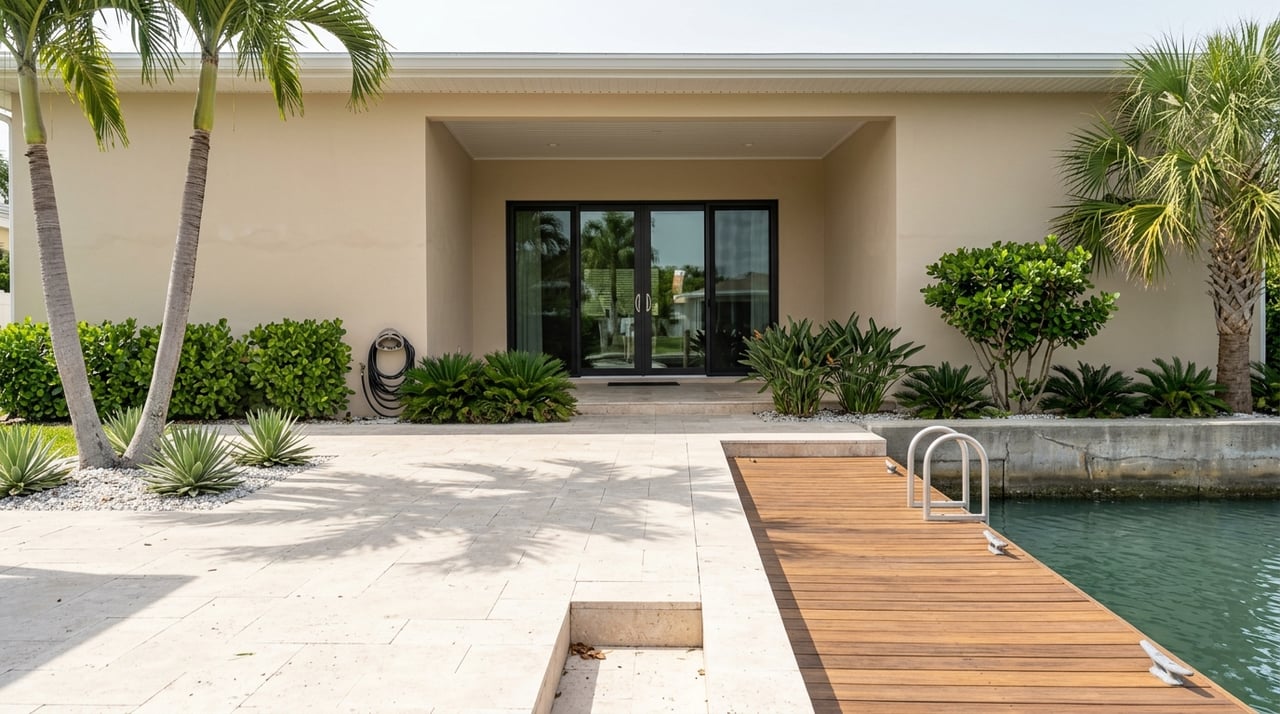
In many Royal Harbor decisions, the house gets most of the attention first. But waterfront infrastructure can be just as important. The dock, boat lift, seawall, canal depth, and access route can all affect whether a remodel or rebuild truly makes sense.
The East Naples Bay Special Taxing District covers the canals in Royal Harbor, along with Golden Shores and Oyster Bay. The district was established to improve water quality and navigability and to provide maintenance dredging in the district’s waterways. Importantly, the district includes the canals but not the properties facing Naples Bay.
That distinction matters. Canal lots and bayfront lots can face different maintenance, dredging, and dock considerations. So if you are comparing two properties or planning improvements, you need to know exactly how the parcel is situated.
Marine permits can affect scope and timing
The City of Naples requires marine permits for dredging, docks, boat lifts, pilings, seawalls, riprap, and related work. Dredging also requires a marine permit, and dredging on a natural water body requires council approval before the marine permit can be issued.
The marine permit process can involve more than many buyers expect. The city’s application requires proof of longshore insurance, a final survey for new piers or docks, and written state or federal approvals when required. In other words, waterfront work can become a permitting project before it becomes a building project.
If a property needs both house improvements and marine work, your decision should account for both from the start. A home that looks like a simple remodel on paper may be more involved if the seawall, dock, or canal access also need attention.
Canal lots versus bayfront lots
Not all Royal Harbor waterfront properties should be evaluated the same way. The City of Naples specifically notes that the East Naples Bay Special Taxing District covers the canals in Royal Harbor, but not bayfront properties facing Naples Bay.
That means your planning checklist may differ based on the lot type. A canal-front property may raise one set of navigability and maintenance questions, while a bayfront property may involve another set of waterfront considerations.
This is one reason broad advice rarely works well in Royal Harbor. The best decision usually comes from looking at the structure, the lot, and the marine features together rather than treating the home as a stand-alone project.
A practical framework for deciding
If you are trying to make a smart call, start with the property basics before getting attached to a design direction. In Royal Harbor, the right path usually becomes clearer once you line up the flood, structure, and waterfront facts.
Start with these five questions
- Is the existing structure worth preserving?
- Does the current layout mostly work for your needs?
- Will the scope likely stay below the city’s substantial-improvement threshold?
- What condition are the dock, seawall, and other waterfront features in?
- Is this a canal lot or a bayfront lot, and how does that affect the plan?
If the house is solid, the layout is workable, and the scope stays controlled, remodeling may deliver the best result. If the home needs structural, elevation, and layout changes all at once, rebuilding may be the cleaner and more predictable path.
Why local guidance matters
Royal Harbor is not a one-size-fits-all market. A property’s value here often comes from the combination of location, boating access, lot potential, and how well the house supports that lifestyle. That is why technical renovation knowledge can be just as important as pricing strategy.
If you are buying, you want to know what you are really taking on before you close. If you are selling, you want clear advice on whether targeted updates or a broader repositioning will better match buyer expectations. In either case, construction-savvy guidance can help you avoid expensive assumptions.
Whether you are evaluating a dated waterfront home, preparing a property for market, or looking for the right lot to transform, Mauceli Grech Group brings local Royal Harbor insight and renovation-minded perspective to help you move with confidence.
FAQs
Should you remodel or rebuild a home in Royal Harbor, Naples?
- It depends on the structure, layout, flood-compliance risk, and waterfront conditions. Remodels often work best when the shell is sound and the project can stay below the City of Naples substantial-improvement threshold. Rebuilds may make more sense when the home needs major structural, elevation, and layout changes together.
What is the substantial-improvement rule in Naples, Florida?
- The City of Naples defines substantial improvement as work costing 50% or more of the structure’s market value before construction. If a project reaches that threshold, the home must comply with current flood regulations, including elevation to or above base flood elevation.
Are many Royal Harbor homes older homes?
- Yes. Many Royal Harbor homes were built between 1970 and 1999, with additional construction from 2000 to the present. That age mix is one reason buyers and owners often weigh renovation against replacement.
Why is boating such a big part of Royal Harbor, Naples?
- Royal Harbor has a long waterfront history, and local reporting described the area’s canals as developing around the 1960s and identified the neighborhood as a boating community. Waterfront access remains a major part of how buyers evaluate properties there.
Do waterfront improvements in Royal Harbor require permits?
- Yes. The City of Naples requires marine permits for dredging, docks, boat lifts, pilings, seawalls, riprap, and related work. Some dredging activity may also require council approval before a marine permit can be issued.
Does the remodel-or-rebuild decision change for canal lots versus bayfront lots in Royal Harbor?
- Yes. The East Naples Bay Special Taxing District covers Royal Harbor canals but not bayfront properties facing Naples Bay. Because of that distinction, canal and bayfront properties can involve different maintenance, dredging, and dock considerations.